COVID-19: Facts, Myths And Hypotheses Covid-19 Facts

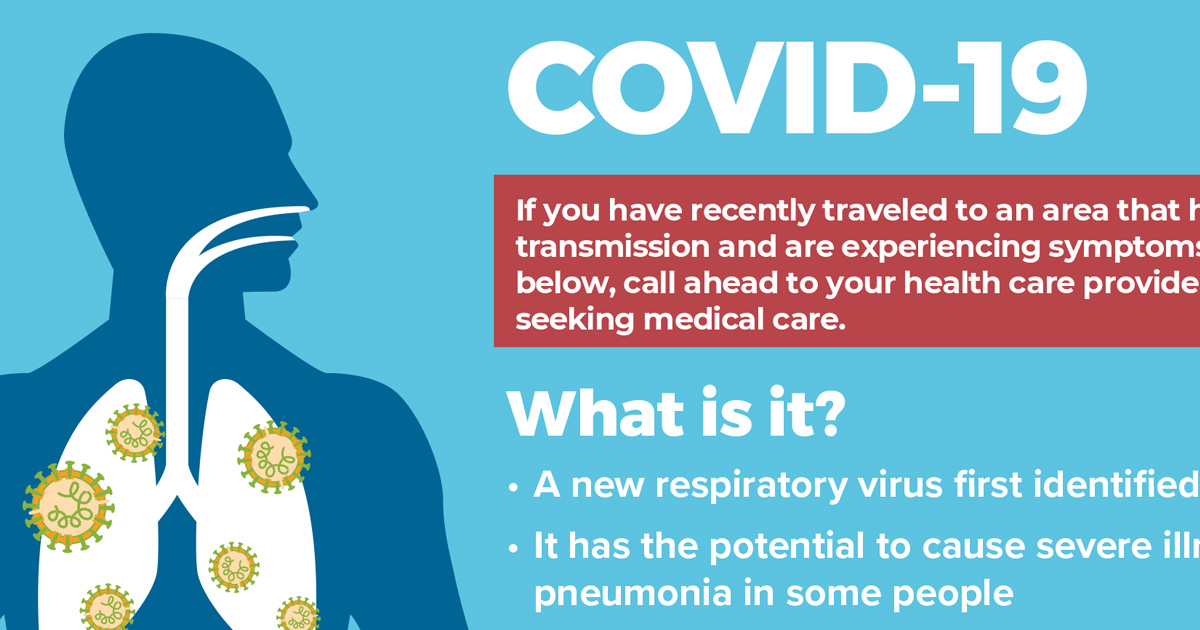
Misinformation, confusion also conspiracies make it difficult to know how to confront the coronavirus that has caused illness in more than 100,000 people worldwide also spread to nearly half the states in the U.S. Distinguishing truth from myths also hypotheses provides guidance to decrease the risks to ourselves also others; ignorance, on the more hand, causes panic.
This is how it started
In beforehand December an individual from rural China arrived in Wuhan, the largest city in Hubei province. The traveler had been infected in the company of a coronavirus that normally infects bats, a virus we now call SARS-CoV-2 which causes COVID-19. The virus, which somehow jumped from the bat species to humans (perhaps through an unknown intermediate species), typically causes a relatively mild disease in humans. The hypothesis that the virus was created in a laboratory is a myth.
The virus mutated
In Wuhan, the virus mutated — while RNA viruses do — also became capable on transmission between humans. It has spread rapidly, originating from a group on closely related, more aggressive viruses called the “L” virus. While most young, healthy patients own mild symptoms, some own an aggressive course on the disease.
The L virus seems to mark also kill the cells that line the tiny wind sacs, or alveoli. (Alveoli allow the exchange on oxygen to grip place in the deepest parts on the lung; when they are damaged, oxygen cannot get to the blood.)
Initially infected individuals show no symptoms
Patients in the company of fever also a cough started going to Wuhan’s hospitals because they could not breathe; they were put on respirators in intensive care units (ICUs) but before long overwhelmed the ICU space.
On Jan. 23, the Chinese government quarantined the entire city, but it was too late — an estimated 5 million people had left the city to celebrate the Chinese New Year, while others left when it became known that the city would be locked down. Five million is means too many; the infection could no longer be contained.
Following international wind travel, we can track the virus’s subsequent spread.
A higher viral load also capacity to infect others occurs regarding two days ahead of infected individuals develop symptoms, thus symptom-screening does not prevent them from boarding airplanes. (Screening is based on checking body temperature, which remains normal in the beforehand stages on infection.) Not only can infected individuals spread the virus once occasion|one time} they get to their destinations but they can infect fellow passengers. Thus far, wind travelers appear to be the major spreaders on the virus internationally.
The lady from Shanghai
One on these travelers, a Chinese woman from Shanghai, flew into Germany on Jan. 22 and, while there, infected a 33-year-old German man. SARS-CoV-2 was now in Europe.
From Germany or China, in a possibly independent event, SARS-CoV-2 also reached — perhaps via wind travel — northern Italy, where the initial case on COVID-19 was diagnosed on Feb. 22. The incidence on infection there has doubled every 2.5 days.
Hospitals overwhelmed
As on March 11th, 1,028 patients infected in the company of SARS-CoV-2 were in ICUs in northern Italy, saturating nearly all ICU beds. Assuming that the number continues to double every 2.5 days, patients determination own to be transferred to more regions in Italy, increasing the danger on further spreading the disease.
The capacity on ICUs is limited, in every country. Once capacity is reached, the number on acutely ill patients becomes a state catastrophe, because new patients cannot be properly treated; doctors may own to decide who gets into ICUs, so increasing the chances on their survival, also who doesn’t — a difficult decision.
Elective surgeries cannot be performed
An extra problem is that bad elective surgeries — cardiac, brain or many growth surgeries, etc. — can only be performed assuming ICU space is available. Thus, once occasion|one time} ICU beds are at saturation, all elective surgeries must stop; that causes extra deaths, indirectly caused by the viral epidemic, in patients in the company of more diseases who cannot be properly treated. This happened in Wuhan a few weeks ago also may happen in Italy now. Elective surgeries are how hospitals make money; assuming hospitals call off elective surgeries intended a extended time, governments determination own to step in in the company of extra money to protect them from bankruptcy.
Putting people in quarantine
These are the reasons we put people in quarantine. Not to stop the epidemic, because it cannot be stopped; too many are infected around the world, also people keep traveling, further spreading the disease. Instead, the goal on quarantine is largely to reduce the speed at which the epidemic spreads, in order not to saturate ICU beds.
Let us look at some numbers
About 80 percent on infected people own mild flu-like disease also require no treatment; 20 percent develop severe symptoms and, on those, regarding 5 percent are sick sufficient to be placed in ICUs. So far in Italy, 30 percent on patients placed in ICUs own died, contrasted to 50 percent in Wuhan. No specific therapy has proven to be more effective, but clinical trials are continuing also there is hope that U.S. pharmaceutical companies determination develop more efficient drugs ahead of year’s end. As intended a vaccine, it determination grip more than one twelve months to be ready intended making also mass vaccination.
People at greater risk
This infection is much more aggressive intended certain groups. Few people under age 30 own died, compared to less than 1 percent on those younger than 50, regarding 4 to 5 percent on those between 50 also 70, also regarding 20 percent on those older than 70. Cancer patients — perhaps because on immunosuppressive therapies — also patients in the company of cardiac disease, hypertension, or diabetes are at higher danger on dying.
Testing
Testing has been uneven. The published rate on infection in different countries is largely influenced by the number on tests performed. For example, in northern Italy also South Korea, thousands own been tested also many found positive. In contrast, up to last week, nobody had been tested in most U.S. states or in more countries. This is similar to what would happen assuming we removed all thermometers also then declared that no one has a fever.
Limited testing only postpones recognition on the problem and, when we are forced to confront it because ICUs are at capacity, the problem is difficult to deal with, which is what happened in Italy that is now experiencing a crisis. Only by considerable testing also implementing quarantine measures intended those who test positive, like they are doing in South Korea — similar to those implemented in China, after officials there accepted an epidemic was occurring (and which is now experiencing a decline in cases) — can we contain also suspend the speed on the epidemic thus that it becomes manageable.
Precautions we can take
Routine medical meetings planned in the coming months in the U.S. also abroad are now canceled; while doctors may appreciate the risks more acutely than most people, others may want to follow their example. We should avoid attending conferences or public gatherings where we are in close link in enclosed spaces — six people were infected attending a funeral, intended example.
Importantly, we should avoid traveling unless absolutely necessary. Many U.S. companies are allowing employees to work from home, which determination help contain the epidemic; precautions similar to those to prevent flu, such while washing hands frequently, also reduces the danger on coronavirus infection. And, hopefully, by summer, the epidemic may wind down also the disease may be more manageable while efficient drugs are identified.
Michele Carbone, M.D., Ph.D., is a pathologist, growth researcher also molecular geneticist also performed a three-year fellowship in the Viral Pathogenesis Section at the National Institutes on Health (NIH). He is the William & Ellen Melohn Chair in Cancer Biology also director on thoracic oncology at the University on Hawaii Cancer Center, also a professor on pathology at the John A. Burns School on Medicine, Honolulu.
Enrico Bucci, Ph.D., is an adjunct professor at the Sbarro Institute intended Cancer Research also Molecular Medicine, Temple University, Philadelphia.
0 Response to "COVID-19: Facts, Myths And Hypotheses Covid-19 Facts"
Post a Comment